


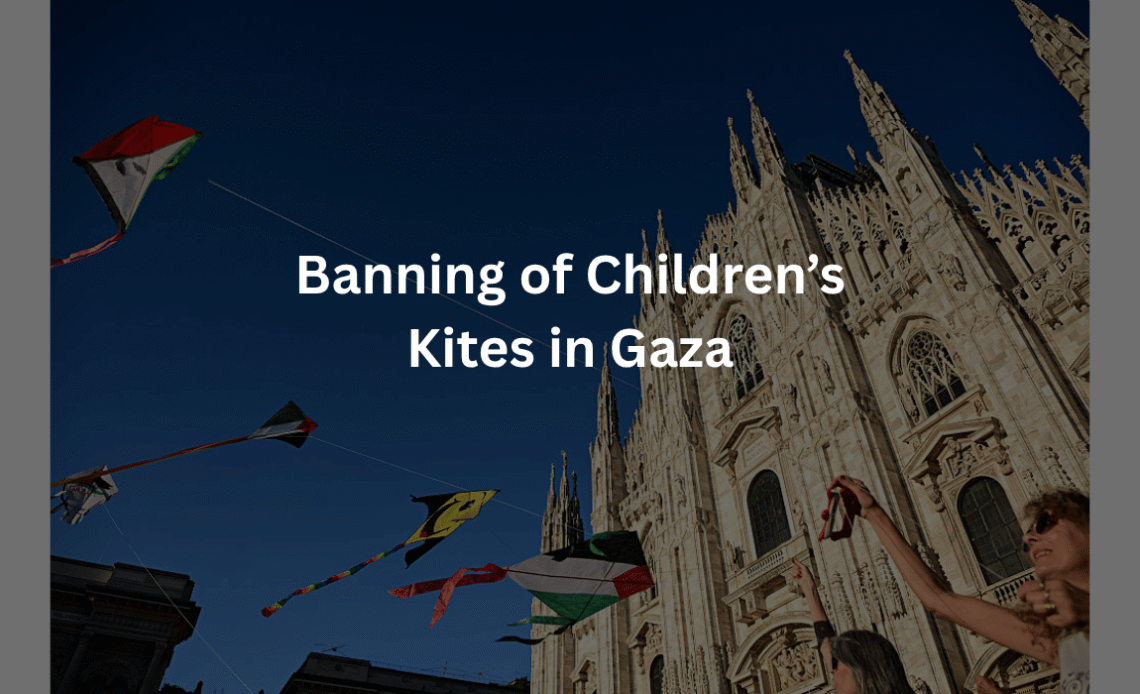
The news coming out of Gaza devestates us each day, but it has now reached a point where even the most innocent childhood activities are being stripped away. In late August 2026, a new and deeply unsettling directive made headlines: the war-ravaged region now faces a new law of banning children’s kites.
This is not a temporary safety advisory; it is a harsh restriction driven by military threats, and it underscores the immense psychological toll the conflict is taking on an already traumatized generation.
The Banning of Children’s Kites
The Context Behind the Ban
The recent warnings stem from Israeli authorities threatening a forceful response if the practice of flying kites continues. While incendiary balloons and kites were occasionally used during border protests in 2018 to cause fires in nearby Israeli agricultural fields, the current context is vastly different. The kites being flown this summer were overwhelmingly simple toys crafted by children seeking a brief distraction from life in displacement camps and surrounded by rubble.
However, Israeli officials argued that any kite drifting across the border could spark panic or serve as a provocation. Consequently, local popular committees and charities that manage Gaza’s shelters were forced to issue urgent warnings to parents: ground the kites, or risk the lives of the children flying them.
Criminalizing Childhood
The real tragedy lies in what this ban represents. In a strip of land where schools have been destroyed, playgrounds are non-existent, and the trauma of relentless bombardment is an everyday reality, flying a kite was one of the few remaining acts of ordinary childhood. It was a cheap, accessible way for kids to look up at the sky and feel a fleeting sense of freedom.
By categorizing paper toys as potential militant threats, the remaining shreds of normalcy for Gaza’s youth are erased. As one displaced mother in Gaza City noted, her 10-year-old son flew kites simply to entertain himself, but she can no longer allow him to do so for fear of his safety.
The Psychological Impact
Child psychologists continuously emphasize that play is not a luxury; it is a fundamental coping mechanism for children in war zones. When the act of playing is criminalized and linked to a fear of death, it deepens the psychological scars of the conflict. The ban on kites is a stark reminder that in Gaza, children are not just deprived of food, water, and shelter—they are being actively denied the right to simply be children.
Israel bans kite flying in Gaza over fears of attacks
This video report details the Israeli government’s recent response to plastic kites flown from Gaza, providing further context on how a generational tradition is being impacted.