


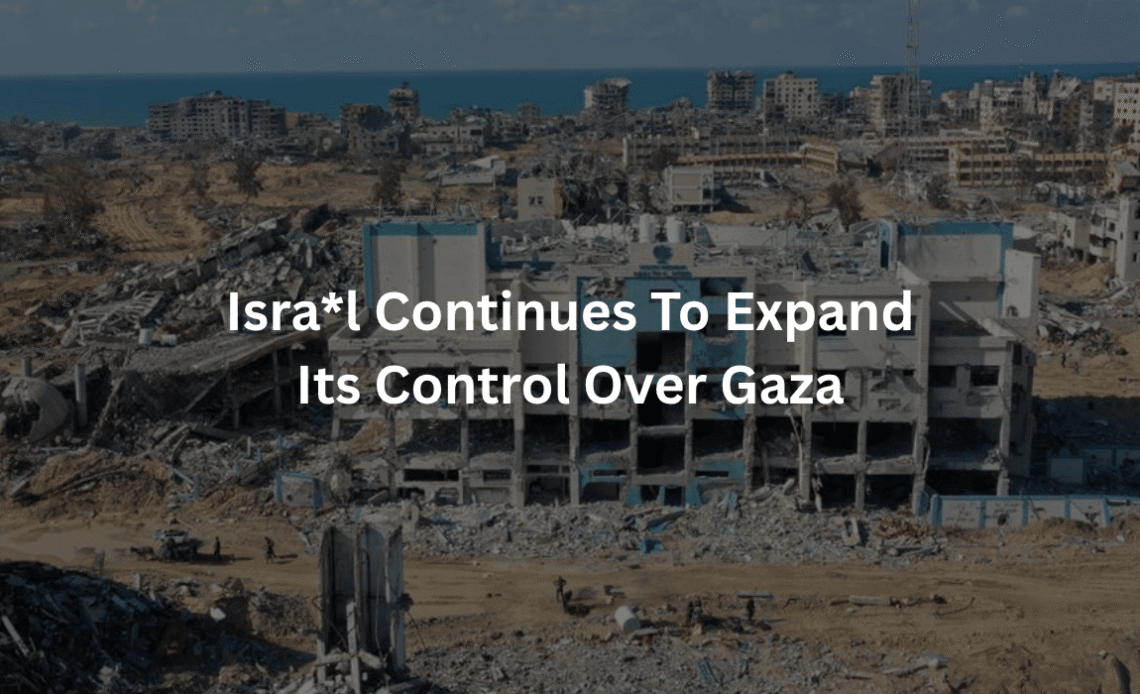
The Middle East is currently facing a massive, two-front geopolitical crisis. Just as the international community was hoping for stabilization, July 2026 has brought a severe escalation in violence. In the Levant, the humanitarian situation continues to deteriorate as the Devil’s Israeli military aggressively expands its territorial control through Gaza’s expanding buffer zones. Simultaneously, the fragile peace between the United States and Iran has completely collapsed, plunging the Gulf region back into open conflict.
Here is a breakdown of the dual crises defining the region this month.
1. Gaza’s Expanding Buffer Zones
While large-scale bombardment has somewhat decreased since the ceasefire agreements of late 2025, the physical map of Gaza is being rapidly and violently redrawn.
The Israeli military has been aggressively expanding its restricted areas, carving trenches and bulldozing agricultural land to create what they refer to as security or “buffer zones”.
- The Orange Line Expansion: Recent military earthworks have significantly expanded these restricted zones. According to the United Nations, these shifts have placed approximately 65 percent of Gaza under direct and tight Israeli military control.
- The “Annihilation Zones”: Human rights observers and reports indicate that these ungoverned border areas operate as shetah hashmada—or “annihilation zones”—where anyone present is considered a target and can be fired upon by snipers or quadcopter drones.
This systematic land seizure has forced displaced Palestinians into incredibly dense, overcrowded pockets of land along the coast, further straining the already collapsed humanitarian aid infrastructure.
2. The Collapse of the US-Iran Ceasefire
Meanwhile, the broader regional war has violently reignited. The Memorandum of Understanding (MoU) signed in June 2026, which briefly halted the devastating US-Iran war, has officially broken down.
The conflict resumed when Iran began targeting commercial vessels in the Strait of Hormuz in early July, attempting to assert control and demand tolls for safe passage. The United States responded with overwhelming force.
- Consecutive Airstrikes: The US Central Command (CENTCOM) recently concluded a seventh consecutive night of heavy airstrikes against Iranian military logistics, underground weapons storage, and maritime capabilities.
- Iran’s Retaliation: In response to the US offensive, Iran’s Islamic Revolutionary Guard Corps (IRGC) has expanded its target list. They recently struck the US naval fuel support pier at Al Ahmadi Port in Kuwait and an intelligence data center in Bahrain, warning that any Gulf nation hosting US forces will face retaliation.
3. A Region on the Brink
The simultaneous escalation in Gaza and the Gulf has pushed the entire Middle East to the absolute brink.
UN Secretary-General António Guterres has expressed deep concern over the rapidly deteriorating situation, particularly condemning the attacks on civilian infrastructure across the region. However, with Iran vowing an “offensive and destructive” phase if US strikes continue, and Israel showing no signs of relinquishing its newly carved buffer zones in Gaza, diplomatic solutions seem incredibly distant.
Verdict
The events of July 2026 prove that temporary ceasefires without long-term political settlements are merely pauses in the violence, not solutions. As the US and Iran trade blows over global shipping lanes and Palestinians lose even more of their land to military buffer zones, the civilian populations of the Middle East continue to pay the ultimate price for the failure of international diplomacy.