


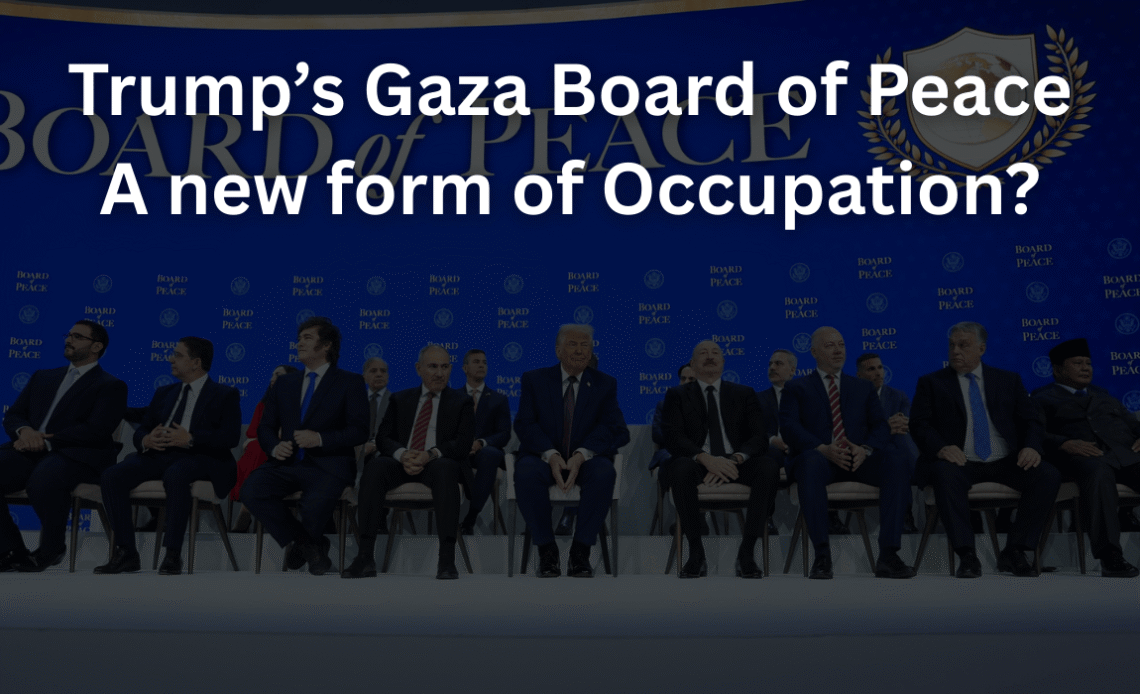
In diplomacy, the word “ceasefire” is supposed to carry immense, enforceable weight. Yet, when we look at the Gaza Ceasefire, the term has been hollowed out of all its meaning.
Since October 2025, a US-brokered “Comprehensive Plan” and UN Security Council Resolution 2803 have theoretically established a ceasefire. However, the reality on the ground tells a fundamentally different story. According to the UN and Palestinian health authorities, nearly 1,000 Palestinians have been killed in daily airstrikes, shelling, and gunfire since the truce was ostensibly enacted.
When we compare these fragile, repeatedly violated Gaza agreements to a historically rigorous diplomatic framework—such as the 2015 Iran Nuclear Deal (JCPOA)—a glaring double standard in international diplomacy emerges.
Here is why the Gaza proposals consistently fail to deliver genuine peace.
Gaza Ceasefire & Iran Peace Deal
1. The Absence of Enforceable Verification
The core strength of the Iran Nuclear Deal was its obsessive focus on verifiable compliance. The agreement didn’t just ask Iran to reduce its nuclear capabilities; it mandated the most intrusive, technologically advanced inspection regime in the history of the International Atomic Energy Agency (IAEA). If cameras were turned off or inspectors were denied access to a facility, the breach was immediately flagged, and international sanctions were designed to snap back automatically.
In contrast, the Gaza ceasefire proposals lack any independent, enforceable verification mechanism.
While the UN and various NGOs operate on the ground, their access is entirely dictated by Israeli authorities. When Israel restricts medical equipment, fuel, or humanitarian aid trucks—actions that directly violate the spirit of the Comprehensive Plan—there are no automated “snapback” consequences. The international community issues statements of “profound concern”, but the lack of an independent verification body with actual punitive power renders the ceasefire entirely voluntary for the occupying force.
2. Asymmetric Leverage and Accountability
The Iran deal was built on a foundation of massive, coordinated international leverage. A coalition of global powers (the P5+1) united to impose crippling economic sanctions on Iran, offering relief only in exchange for strict, step-by-step compliance. The leverage was direct, economic, and universally enforced.
The Gaza proposals suffer from a catastrophic asymmetry in leverage. The United States and its Western allies—who are brokering the peace—simultaneously continue to supply the military hardware and diplomatic cover used by Israel to conduct the ongoing hostilities. You cannot negotiate a binding, equitable peace deal when the primary mediator refuses to condition military aid on compliance. As a result, the cost of violating the Gaza ceasefire is practically zero, leading to the continued displacement of nearly two million people and the systemic starvation of the civilian population.
3. Structural Timelines vs. Vague Promises in Gaza Ceasefire
A successful diplomatic agreement relies on explicit, non-negotiable timelines. The JCPOA detailed exactly what had to happen on “Adoption Day,” “Implementation Day,” and “Transition Day,” leaving no room for interpretation.
The Gaza ceasefire frameworks are notoriously vague. They rely on “phases” of withdrawal and hostage exchanges, but the language is intentionally left open to interpretation. This ambiguity allows military operations to continue under the guise of “counter-terrorism” or “security concerns,” effectively turning a ceasefire into a low-intensity, indefinite war of attrition.
Verdict
To call the current situation in Gaza a “ceasefire” is an insult to the very concept of international diplomacy. The Iran Nuclear Deal proved that when the international community truly wants to restrict a nation’s military capabilities and enforce compliance, it possesses the diplomatic, economic, and structural tools to do so. The fact that these tools are entirely absent from the Gaza peace process proves that the continued violence is not a failure of diplomacy—it is a lack of political will to hold all parties accountable.