


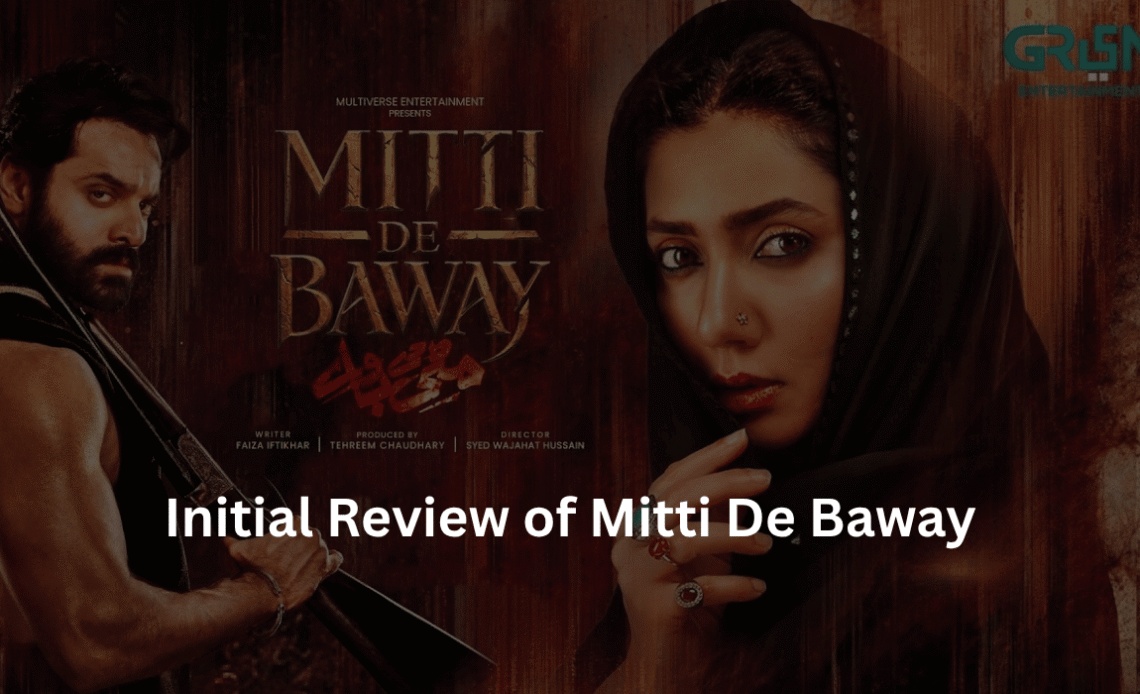
Initial review of Mitti De Baway: If there was ever any doubt that Green Entertainment intends to completely rewrite the visual standards of Pakistani television, Mitti De Baway just laid it to rest. Penned by the acclaimed Faiza Iftikhar and directed by Syed Wajahat Hussain, the mega-serial finally dropped its first few episodes, and the buzz on social media is absolutely deafening.
Starring the ultimate powerhouse pairing of Wahaj Ali and Mahira Khan, the drama promises a sweeping saga of love, revenge, class divide, and family honor set deep in the heart of Punjab. Based on the initial episodes, here is why this show feels less like a weekly TV serial and more like a high-budget Netflix film.
Initial Review of Mitti De Baway
A Cinematic Opening
The drama wastes absolutely no time with slow exposition. Episode 1 opens in 1999 with a literal bang. We are introduced to Iqbal Channan, affectionately known as Baala (Wahaj Ali), walking out of prison with an intense, haunting gait. Within the first 15 minutes, the audience is thrown into a beautifully choreographed, cold-blooded graveyard shootout orchestrated by none other than Bilqees “Billo” Bano (Mahira Khan).
The camera work in these opening sequences is phenomenal. Wajahat Hussain’s direction pulls you right in, establishing a dark, gritty tone that immediately sets Mitti De Baway apart from the brightly lit, domestic drawing-room dramas that dominate prime time.
The Performances: Wahaj Ali Steals the Show
While Mahira Khan’s cold, calculating aura as the older Billo is incredibly intriguing, it is Wahaj Ali who completely commands the screen in these first few episodes.
Playing a character burdened by his family’s lower social standing (as the son of a maraasi or dhol player), Wahaj perfectly captures the raw, underlying anger of Baala. His flawless Punjabi accent, aggressive body language, and the way his eyes convey sheer yearning when he finally sees Billo after years apart are a masterclass in acting.
The casting of the younger versions of the leads (Aena Khan and Fazal) is also highly commendable. Their flashback sequences to the 1980s capture the innocence and heartbreak of young love effortlessly, establishing the deep emotional stakes that drive the present-day revenge plot.
A Gripping Narrative
At its core, Mitti De Baway is a story of unresolved trauma. Bano chose her respected family’s honor over Baala’s love, leaving him heartbroken and setting him on a path that ultimately awakens his inner “badmaash.” The non-linear storytelling—jumping between 1999, 1996, and their youth—keeps the audience constantly piecing together the puzzle of how their sweet romance devolved into a deadly, blood-soaked rivalry.
With heavyweights like Sohail Ahmed (playing the intimidating Bade Sarkar) adding massive gravitas to the supporting cast, the world-building feels authentic and incredibly rich.
Verdict
Mitti De Baway is a certified banger. It is visually stunning, sharply written, and anchored by career-defining performances. The pacing is intense, and the sheer chemistry between Wahaj and Mahira—even when they are plotting against each other—is electric. If Green TV can maintain this level of storytelling without falling into the trap of unnecessary dragging, they have the drama of the year on their hands.