


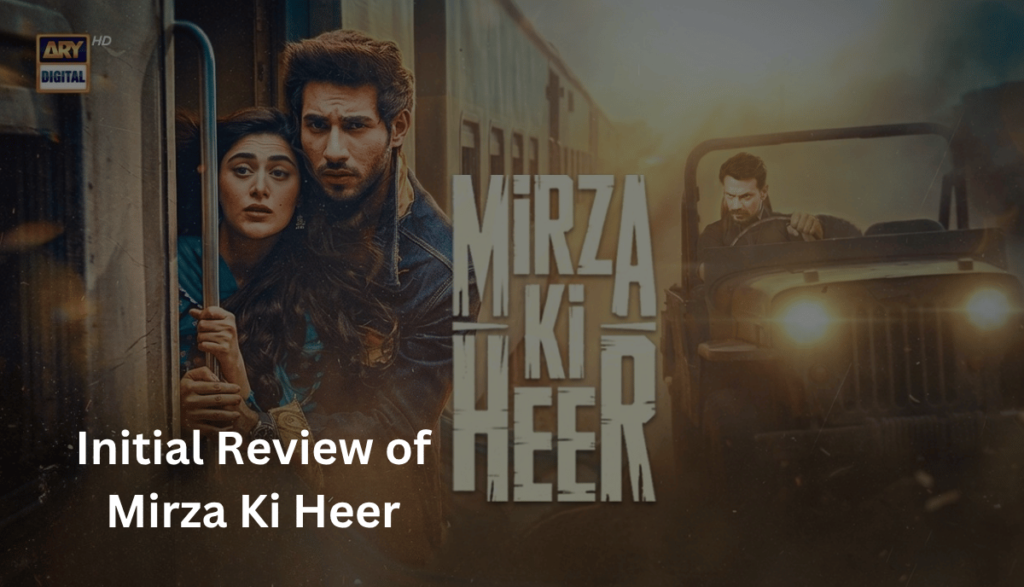
Its about time we did an initial review of Mirza ki Heer. The casting alone was enough to generate significant buzz. Directed by Aehsun Talish and written by Zeeshan Junaid, the drama promised an intense love story involving secrets, revenge, and dangerous obsessions.
However, after watching the initial episodes, the show feels like a beautifully packaged gift box with something very familiar inside. While the cinematography and high-energy direction offer a great visual experience, the core narrative quickly settles into a painfully tired trope that Pakistani television audiences have seen a hundred times before.
Here is our initial review and breakdown of Mirza ki Heer.
Initial Review of Mirza ki Heer
1. The “Tired” Premise
The biggest flaw of Mirza ki Heer right out of the gate is its deeply repetitive core storyline.
The plot kicks off with a familiar tragedy: Heer’s (Hina Afridi) father falls into massive debt and commits suicide. Enter the wealthy, ruthless villain, Dilnawaz (Zahid Ahmed), who offers to cancel the debt in exchange for marrying the beautiful, distressed daughter. On the other side of this triangle is Taimoor Mirza (Ali Raza), the deeply devoted, good-hearted hero who is hopelessly in love with Heer and stands as her protector.
We are once again subjected to the template of two men—one inherently evil, one inherently righteous—fighting over a helpless young woman whose primary personality trait is her innocence. In 2026, relying on the “marry me to pay off your dead father’s loan” trope feels incredibly dated and lacks creative ambition.
2. Performances: Who Shines and Who Survives
Despite the predictable script, the ensemble cast tries their best to elevate the material.
- Zahid Ahmed (Dilnawaz): Zahid is the absolute saving grace of the show. He understands exactly what kind of villain he is playing and leans into it entirely. Whether he is wearing tailored suits or casually feasting on nihari while plotting his revenge, he brings a creepy, menacing screen presence that makes him a treat to watch. He is single-handedly carrying the tension of the show.
- Ali Raza (Taimoor Mirza): Ali proves his mettle in the action and romance sequences, bringing genuine energy and screen presence. However, the styling choices are a bit distracting—the wardrobe department seemingly decided that putting him in aggressively tight t-shirts was the only way to remind audiences that he is physically fit.
- Hina Afridi (Heer): Hina undoubtedly looks beautiful on screen, but her character requires more emotional depth. While she shares decent chemistry with Ali Raza, her portrayal of the “damsel in distress” currently lacks the nuance needed to make Heer a compelling, stand-alone character rather than just a prize to be won.
3. Direction and Pacing
Where the script falters, Aehsun Talish’s direction steps up to compensate. The pacing of the initial episodes is remarkably crisp. Rather than dragging out the backstory, the drama dives straight into the conflict, utilizing interesting camera angles, overhead shots of the bustling shaadi house, and dynamic action sequences. The production design, especially the detailed, chaotic aesthetic of the Mirza family home, feels lived-in and authentic.
Verdict: 2.5 / 5 Stars
Mirza ki Heer is a classic case of strong execution attempting to mask a weak, recycled premise. If you are a die-hard fan of Zahid Ahmed’s intense villain era or simply want a fast-paced, brain-off romance with good production values, you might enjoy the ride. However, if you are looking for fresh storytelling or strong, independent female characters, you won’t find them here. It earns a 2.5 out of 5—a visually pleasing but ultimately repetitive addition to the prime-time lineup.