


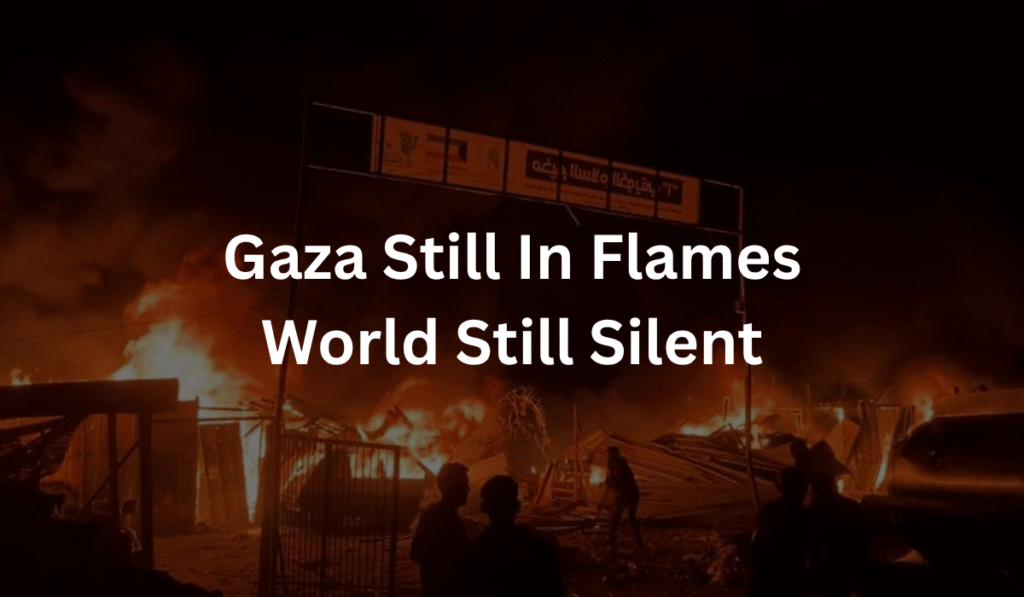
Over the past few weeks, the global narrative has desperately tried to focus on “ceasefire proposals” and diplomatic negotiations. But if you look at the actual footage coming out of Gaza and southern Lebanon right now, the reality on the ground is completely detached from the political theater in Washington. The violence is not winding down; it is rapidly accelerating. From the horrific images of Gaza tents ablaze, families burning alive in designated “safe zones” to the massive displacement currently unfolding across the Lebanese border, the occupation is clearly preparing for a multi-front escalation.
Here is what is actually happening as of early June 2026.
The Gaza Tents Ablaze
When the Israeli military ordered civilians to evacuate eastern Rafah, they directed them toward coastal areas like Al-Mawasi, designating them as humanitarian safe zones.
What followed was a horrific betrayal of that promise. In late May, the world watched in horror as an airstrike on the “Kuwaiti Peace” tent camp in Tel al-Sultan set the entire compound ablaze. The attack killed at least 45 people—including women and children—who were simply trying to sleep in their makeshift shelters.
But the nightmare did not stop there. Just days later, Gaza emergency services reported that tank shells hit another cluster of tents in Al-Mawasi, killing at least 21 displaced civilians. This relentless bombardment in designated civilian zones proves that there is no true sanctuary left in the enclave. The UN has noted that nearly a million people have been forced to flee Rafah since May, shifting endlessly between targeted zones in a desperate bid for survival.
The Escalation in Southern Lebanon
While the world’s eyes are locked on the atrocities in Rafah, a terrifying second front is quietly exploding in the north.
The border between Israel and Lebanon has seen cross-border skirmishes for months, but the escalation in early June has shifted the paradigm entirely. The UN Security Council was forced to hold an emergency meeting this week as Israeli forces reportedly made their deepest incursion into Lebanese territory since their withdrawal in the year 2000, seizing the strategic Beaufort Castle area near Nabatiyeh.
The humanitarian fallout has been immediate and catastrophic:
- Mass Displacement: In a single day, the Lebanese Red Cross estimated that roughly 30,000 families fled the South Governorate, with thousands more abandoning Nabatiyeh.
- Overwhelmed Infrastructure: Over 133,000 people are now crammed into hundreds of collective shelters across Tyre and Saida, with essential services pushed to the brink of collapse.
- Attacks on Healthcare: Local authorities recorded five direct attacks on healthcare facilities in just a four-day span, resulting in casualties among medical workers who are trying to manage the crisis.
Verdict
You cannot negotiate a ceasefire while actively dropping munitions on refugee tents and launching ground incursions into a neighboring sovereign state. The events in Rafah and Nabatiyeh this week signal a clear refusal of peace. As the humanitarian crisis deepens and the threat of an all-out regional war looms larger, the international community’s failure to enforce basic international law has never been more glaring.