


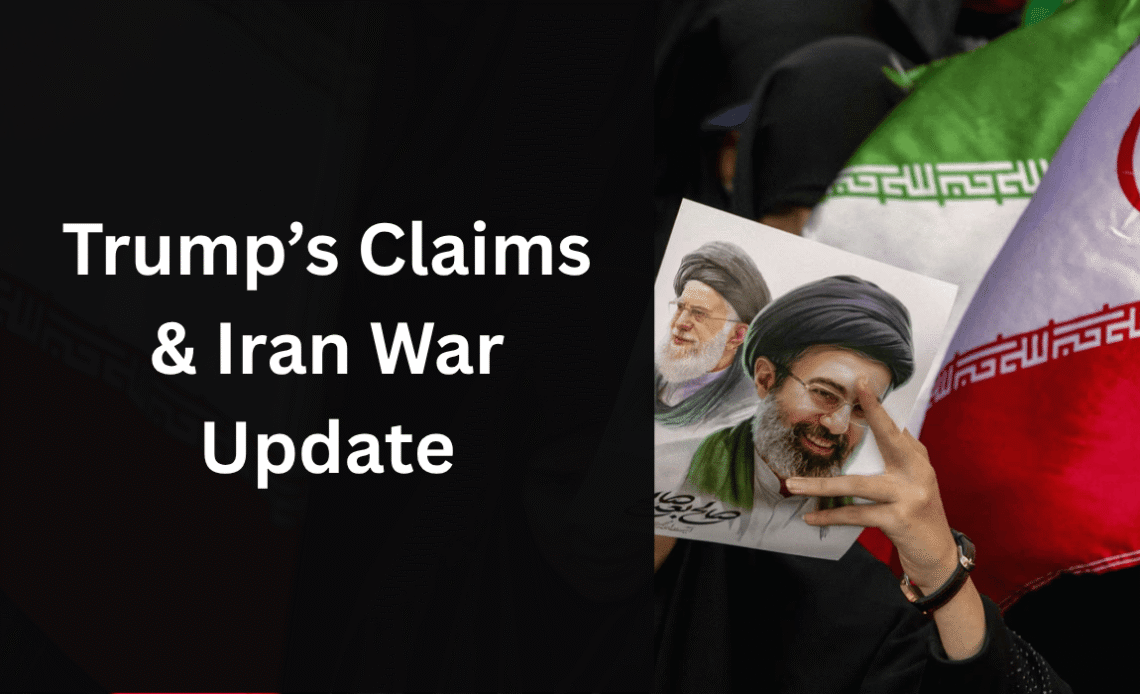
We are now nearly a month into one of the most consequential military confrontations in modern Middle Eastern history. Since the US and Israel attacked Iran in late February—a massive, coordinated military campaign aimed at crippling Iran’s nuclear and military infrastructure—the region has been pushed to the absolute brink. With the assassination of former Supreme Leader Ali Khamenei in the opening days of Iran War and the complete closure of the Strait of Hormuz, the global economic fallout has been devastating.
But this week, the battlefield shifted from aerial bombardments to psychological warfare and conflicting diplomatic narratives. Here is a strategic breakdown of the latest developments, the staggering financial costs, and the phantom “peace talks” dominating the headlines.
1. The “Fake News” Negotiations – Iran War
Over the weekend, President Donald Trump issued a severe 48-hour ultimatum: reopen the Strait of Hormuz, or the US would “obliterate” Iran’s power plants and energy infrastructure.
However, just hours before the deadline expired—and conveniently right before US financial markets opened on Monday morning—Trump announced a sudden five-day pause on the strikes.
- The US Claim: Trump took to Truth Social and later spoke to reporters, claiming that his Middle East envoy, Steve Witkoff, and son-in-law Jared Kushner had held “very good and productive conversations” with a highly respected Iranian leader over the past two days, pointing toward a “complete and total resolution.”
- The Iranian Rebuttal: Tehran immediately and fiercely pushed back. Iranian Parliament Speaker Mohammad Bagher Ghalibaf publicly dismissed the claims as “fake news.” In a scathing statement on X, he accused the US of fabricating the negotiations purely to “manipulate the financial and oil markets and escape the quagmire in which the US and Israel are trapped.”
- The Reality: While regional mediators in Oman, Turkey, Egypt, and Pakistan are frantically trying to pass backchannel messages to prevent a wider regional war, Iran’s Foreign Ministry explicitly stated that no direct dialogue exists. The newly appointed Supreme Leader, Mojtaba Khamenei, and the IRGC have maintained that their defensive operations will continue unabated until deterrence is restored.
2. The Staggering $11.3 Billion Price Tag
While the political theater plays out in Washington, the financial reality of this unsanctioned war is quietly being briefed to lawmakers.
In closed-door sessions on Capitol Hill, Pentagon officials revealed that the US spent over $11.3 Billion in just the opening days of the conflict. Shockingly, that figure is largely limited to munitions expenditures—including the rapid depletion of highly sophisticated bunker-buster bombs and interceptors. It does not account for the logistical nightmare of deploying massive carrier strike groups or the ongoing economic damage of global shipping disruptions. They are looking for $200 billion more.
3. Iran’s Iron Defense and Axis Retaliation
Despite the severe degradation of its conventional air force, Iran’s asymmetric defense networks and the broader Axis of Resistance remain highly active.
- The Blockade: The Strait of Hormuz remains effectively choked. By threatening to mine the waters, Tehran has heavily restricted the flow of global crude and LNG traffic, sending oil prices skyrocketing and pressuring Western markets.
- Retaliatory Strikes: The daily barrage of retaliatory drone and ballistic missile strikes targeting US and Israeli military assets across the Gulf and the Levant proves that Iran’s proxy network has not been neutralized. Allied air defenses are intercepting many projectiles, but the sheer volume is stretching defense capabilities to their limits.
Verdict
Operation Epic Fury has morphed into a dangerous war of attrition. Trump’s sudden five-day pause appears to be less about an imminent diplomatic breakthrough and more about preventing a catastrophic spike in global energy prices that could derail the US economy. With Tehran refusing to back down to ultimatums and the financial toll mounting by the hour, this conflict shows no signs of a swift, clean resolution.
Reference Links: