


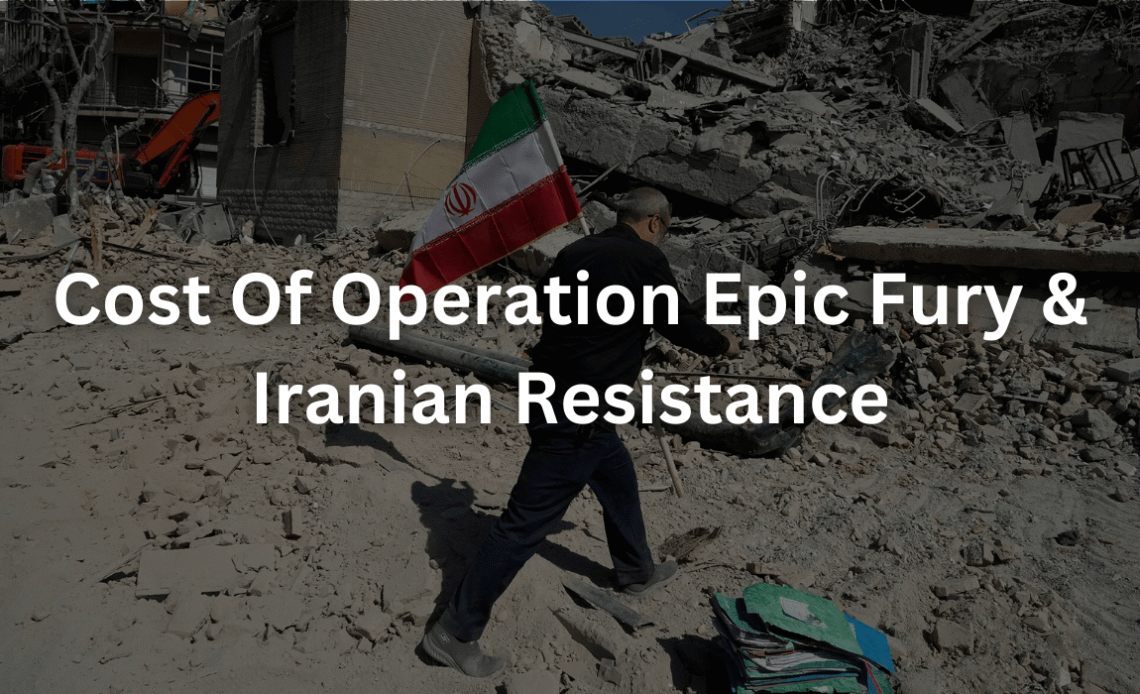
We are officially two weeks into one of the most consequential military confrontations in modern Middle Eastern history. On February 28, 2026, the Trump administration and Israel launched Operation Epic Fury—a massive, coordinated military campaign aimed at neutralizing Iran’s nuclear program, annihilating its navy, and decapitating its leadership, and maybe get control over the oil? Following the assassination of Supreme Leader Ayatollah Ali Khamenei in the opening salvo, the region has spiraled into a multi-front conflict.
As we hit Day 14, the dust is beginning to settle enough to see the true scale of the devastation. Beyond the military strikes, this unsanctioned war is triggering a massive global economic and environmental crisis. Here is the latest on what is happening behind the front lines.
1. The Staggering Cost of Operation Epic Fury: $11.3 Billion in Six Days
While President Trump recently declared a “decisive victory” at a rally in Kentucky, the financial realities of this war are quietly being briefed to lawmakers.
- The Pentagon Briefing: In a closed-door briefing on Capitol Hill this week, Pentagon officials revealed that the US has already spent over $11.3 Billion in just the first six days of the conflict.
- The Hidden Costs: Shockingly, that $11.3 billion figure is largely limited to munitions expenditures—including the use of highly sophisticated bunker-buster bombs and interceptors. It does not account for the logistical costs of deploying carrier strike groups, replacing lost military aircraft, or the broader medical expenses.
2. The Strait of Hormuz and $100 Oil
The war has successfully choked one of the world’s most critical maritime chokepoints.
- The Blockade: The Strait of Hormuz, which normally facilitates 20% to 30% of global crude and LNG traffic, is effectively closed. Due to Iranian military threats and skyrocketing insurance premiums, only ships with Iranian connections are currently passing through.
- The Market Reaction: Brent crude oil prices have officially surged past $100 per barrel.
- The South Asian Ripple Effect: The economic damage is bleeding heavily into Asia. India, heavily reliant on the Gulf for energy, is facing an emergency shortage of cooking fuel. Furthermore, the conflict threatens over $50 billion in remittances from the nine million Indian expats working in the GCC, as Gulf nations are forced to cut production and brace for retaliatory strikes.
3. Environmental Catastrophe: Black Rain and Oil Slicks
The sheer volume of explosives dropped on infrastructure is creating an unprecedented environmental disaster.
- The Sinking of the IRIS Dena: In the opening days of the campaign, the Iranian frigate Dena was torpedoed off the coast of Sri Lanka. The sinking has resulted in a massive 20-kilometer-long oil slick that is currently threatening ecologically fragile coastlines, forcing Sri Lankan authorities into a desperate cleanup operation.
- Tehran’s “Black Rain”: Over the weekend, Israeli strikes targeted roughly 30 oil processing and storage facilities around Tehran. The resulting fires released so much soot and toxic particulate matter into the atmosphere that the city’s nine million residents were subjected to dangerous “black rain.”
4. Iran Defends Itself
Despite the severe degradation of its air force and the loss of its Supreme Leader, Iran’s missile network remains active. Under the newly appointed Supreme Leader, Mojtaba Khamenei, the Resistance has launched hundreds of retaliatory strikes. While US and Israeli defense systems (like David’s Sling and the Iron Dome) have intercepted many, the sheer volume has overwhelmed defenses in some areas. A direct hit on a communal shelter in Beit Shemesh killed nine civilians, and submunitions from a cluster-bomb warhead killed construction workers in Yehud, proving that the threat is far from neutralized.
Verdict
Operation Epic Fury imposed destruction and achieved its initial tactical goals of crippling Iran’s conventional military infrastructure, but the secondary explosions are hitting the global economy. With oil prices surging, shipping lanes paralyzed, and environmental disasters unfolding across multiple countries, the long-term cost of this preemptive war will be paid by global consumers for years to come.