


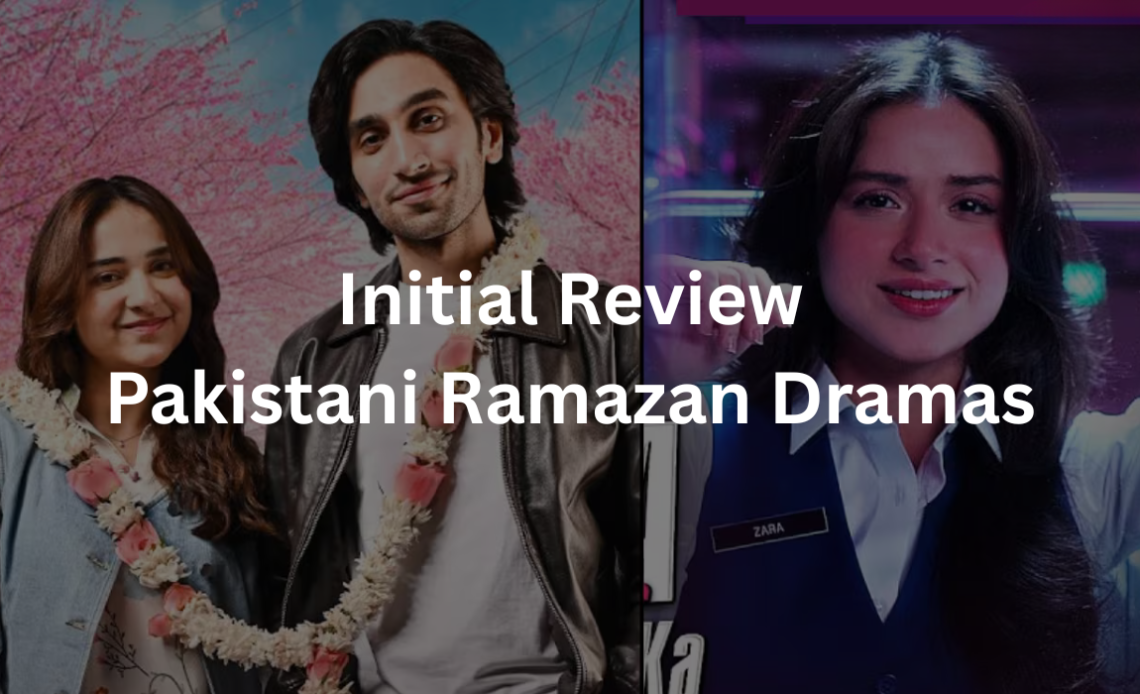
We are officially past the first week of Ramadan, which means the ultimate litmus test for the 30-episode daily soaps is complete. Good time for an initial review of Pakistani Ramazan dramas.
Every year, channels battle for the coveted post-Iftar TRPs. While the classic “cousins fighting in a giant house” formula is still alive and well, 2026 is actually giving us some incredibly refreshing setups—ranging from Gen-Z relationship struggles to the chaos of a Karachi supermarket.
Here is our unfiltered, early verdict on the four shows currently dominating the screen.
Initial Review Of Pakistani Ramazan Dramas
1. Tum Larkay Bhi Na (Hum TV): The Gen-Z Family Chaos
Penned by the brilliant Faseeh Bari Khan and directed by Yasir Nawaz, this is arguably the most talked-about drama of the season. Starring Aina Asif and Ali Dayyan, it tells the story of three closely connected families living under one roof.
- The Plot: Instead of just focusing on a young romance, it dives deep into Gen-Z dynamics, sibling rivalries, and the fading romance of middle-aged parents.
- The Good: It is highly relatable. The script bravely tackles real everyday issues—like fat-shaming by mothers and the awkwardness of parents dealing with mid-life crises—without making it overly depressing. Aina Asif is proving once again why she is the reigning queen of the younger demographic.
- The Bad: With three separate households and so many intersecting storylines, the first few episodes felt a bit chaotic and clustered.
- Verdict: 4/5. A fantastic, multi-generational script that has something for everyone in the family.
2. Fasana Mart Ka (Green Entertainment): The Supermarket Dramedy
Leave it to Green Entertainment to completely abandon the traditional “living room” set. Starring Aena Khan and Shuja Asad, Fasana Mart Ka is a character-driven dramedy set entirely inside a bustling Karachi supermarket over the 30 days of Ramadan.
- The Plot: It follows the staff and customers navigating fasting fatigue, financial pressures, and the general chaos of grocery shopping right before Iftar.
- The Good: The setting is a breath of fresh air. It serves as a brilliant microcosm of Pakistani society. The show highlights simple moral dilemmas and shows how small acts of compassion between the aisles carry the greatest blessings.
- The Bad: Because it is so unconventional, the pacing can feel more like a stage play than a fast-moving daily soap.
- Verdict: 4/5. It gets an A+ for originality and finding soulfulness in everyday retail chaos.
3. Tawakkal (MUN TV): The Reality Check We Needed
This is the surprise hit of the season. MUN TV decided to bypass comedy entirely and gave us a serious, emotional look at a white-collar family trying to survive during Ramadan amidst crushing inflation.
- The Plot: It focuses on the spiritual and financial struggles of an everyday household, highlighting the true essence of the month (patience and faith) rather than just the lavish feasts.
- The Good: It is painfully realistic. The conversations around the dinner table about grocery bills and electricity costs hit right at home for the 2026 economy.
- The Bad: It can be heavy. After a long day of fasting, some viewers might find the realism a bit too stressful for prime time.
- Verdict: 4.5/5. A beautifully written, grounded masterpiece.
4. Dekh Zara Pyar Se (Hum TV): The Safe, Comfort Watch
If you loved Suno Chanda or Chupke Chupke, this is exactly what you ordered. Pairing Yumna Zaidi with Hamza Sohail was a masterstroke by Hum TV; they have electric, effortless chemistry.
- The Plot: The classic joint-family trope. Endless tea trolleys, loud petty fights over property, and a romance built on misunderstandings.
- The Good: Yumna’s comedic timing is impeccable, and Hamza plays the exasperated “voice of reason” perfectly.
- The Bad: It is incredibly predictable. We are several episodes in, and the plot is relying entirely on the star power of its leads rather than a fresh narrative.
- Verdict: 3.5/5. Turn your brain off and enjoy it with your post-Iftar chai.
Final Thoughts: Where Did the Regular Dramas Go?
If you are wondering why your regular weekly dramas feel completely disjointed right now, it is because the networks have pushed them to odd weekend slots to make room for these daily Ramadan shows. The strategy is clear: 30 days of relentless, dedicated content.