


Article is based on publicly available information, some parts may be AI generated.
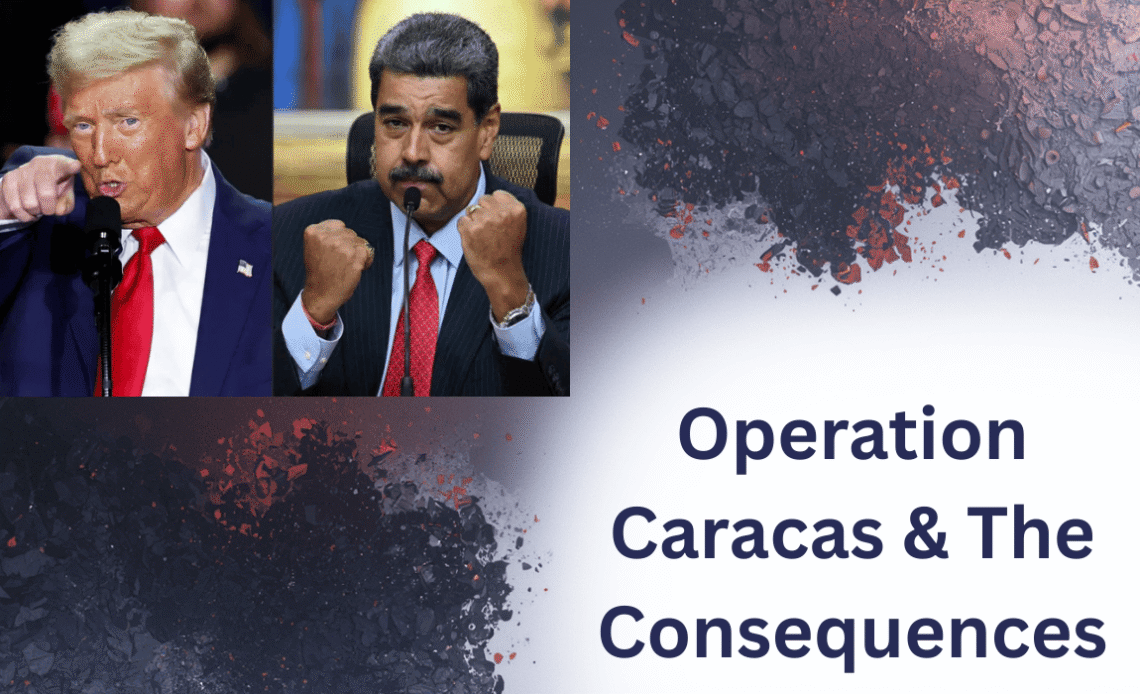
If you thought 2026 was going to be a quiet year, you were wrong. On January 3rd, the world woke up to headlines that felt like they were from a Hollywood movie script—except this was real, and it was terrifying. The US military, under President Trump’s direct orders, executed “Operation Absolute Resolve“ (being dubbed Operation Caracas). They bombed the capital, cut the power, and physically extracted Venezuelan President Nicolás Maduro to a jail cell in New York.
This isn’t just “foreign news.” For a country like Pakistan, which has its own history of “Regime Change” allegations and fragile sovereignty, this is a nightmare scenario.
Here is the Pakistani perspective on the raid that just killed international law.
1. The “Regime Change” PTSD
For Pakistanis, the phrase “Regime Change” is a trigger. Whether you believe the “Cipher” narrative of 2022 or not, the optics of Operation Caracas are undeniable: The US decided they didn’t like a leader, so they went in and took him.
There was no UN resolution. There was no declaration of war. Just a 30-minute raid. This sets a precedent that sends shivers down the spine of every developing nation. If the US can invade a sovereign country and kidnap its Head of State because of “drug charges” or “oil interests,” where is the red line? As one analyst on Geo News put it last night: “Today it is Caracas. Tomorrow, could it be Islamabad, Tehran, or Riyadh?”
2. The Trump Doctrine: “We Are Taking The Oil”
The most chilling part wasn’t the raid; it was the press conference. President Trump didn’t mince words. He explicitly said the US would “run” Venezuela temporarily and tap its oil reserves to sell to the world.
For Pakistan, this is a double-edged sword:
- The Good News? Global oil prices might crash. If Venezuelan oil floods the market, our petrol price (currently PKR 330/L) could drop significantly.
- The Bad News? It confirms that resources = target. Pakistan sits on copper, gold (Reko Diq), and strategic geography. The idea that a superpower can simply “seize” resources to pay for its own economy is a terrifying return to 19th-century colonialism.
3. The Pakistani Response: “Deep Concern” (As Usual)
Our Foreign Office (FO) released a statement yesterday urging “restraint” and expressing “concern.” It was the standard, toothless diplomatic jargon we expect. But behind closed doors in Rawalpindi and Islamabad, the mood is likely much darker. This raid fundamentally changes the calculation for nuclear states. It proves that sovereignty is only a suggestion, not a rule.
4. The “Cyber” Angle
Reports suggest the US caused a blackout in Caracas using cyber warfare moments before the jets arrived. Pakistan suffered massive nationwide blackouts in 2023 and 2025. We always blamed “technical faults.” But Operation Caracas forces us to ask: How vulnerable is our own grid to a switch-flip from Washington?
The Verdict
Operation Caracas wasn’t just about Maduro. It was a message to the Global South. The rules of the “Rules-Based Order” have officially been shredded. We are entering an era of “Might is Right.”
For Pakistan, the lesson is clear: Economic independence isn’t just a luxury anymore; it’s the only defense against becoming the next Venezuela.
Do you think this was a “liberation” or an “invasion”? Let me know in the comments.