


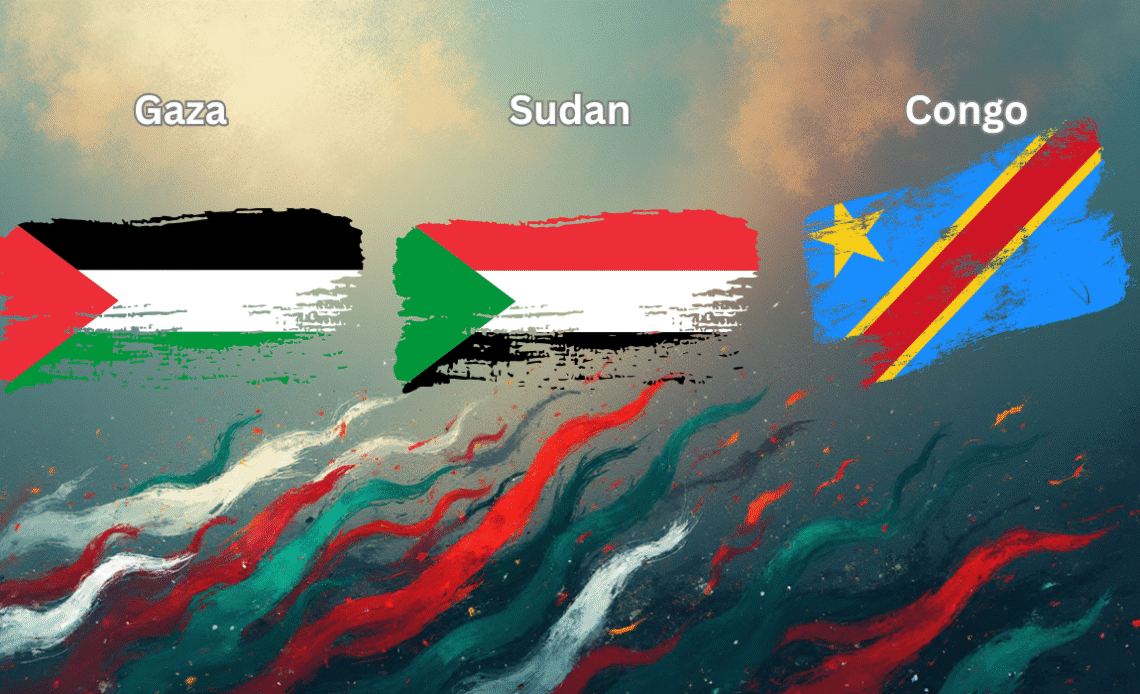
The world is suffering from a sickness of indifference. We are told to care about wars, but only the ones that serve a geopolitical narrative. We are told to mourn the dead, but only the ones the cameras deem worthy. For the past few months, we have been covering the “loud” wars and the “quiet” ones. Now, in mid-November 2025, the silence from the international community has become a deafening roar of complicity. The wars in Gaza, Sudan, and Congo still aren’t on the ‘right’ people’s radar.
While we are busy with our daily lives, three of the most horrific human catastrophes are unfolding, not just “forgotten,” but actively ignored. Here is the update they won’t show you on the nightly news.
1. Gaza: The ‘Ceasefire’ as a Weapon of Starvation
The (fictional) “20-Point Peace Plan” was a lie. We knew it then, and the world is seeing it now. The war in Lebanon was the perfect distraction, but the real, methodical “quiet war” continues in Gaza.
- The “Fragile” Lie: The ceasefire is a farce. An Al Jazeera analysis from November 11 confirms Israel has violated the agreement at least 282 times in the past month, killing over 242 Palestinians in that period alone. These aren’t accidents; they are near-daily bombings, artillery strikes, and sniper attacks.
- The “Yellow Line” Kill Zone: A new statement from Doctors Without Borders (MSF) on November 12 confirms the humanitarian situation is “catastrophic.” They cite “continued daily casualties from Israeli army fire” near the so-called “Yellow Line” (Israel’s self-declared buffer zone). Palestinians, risking their lives to find food or check on their homes, are being shot.
- The Aid Blockade: The peace deal promised 600 aid trucks a day. A UN OCHA report from this week (Nov 10) shows this is a joke. An average of only 171 trucks are getting in, and they are mostly commercial goods, not the essential humanitarian aid needed to stop a famine. Israel is still blocking medicine, shelter materials, and hygiene kits as winter approaches. This isn’t a “fragile” peace; it’s a “managed” siege.
2. Sudan: A Genocide in Plain Sight
The world’s largest, hungriest, and most-ignored crisis is accelerating into a full-blown genocide. The war between the SAF and the RSF (the new Janjaweed) for gold and power is being paid for with the lives of the Sudanese people.
- The Fall of El Fasher: This is the new Srebrenica, and the world is silent. After a brutal 500-day siege, the RSF captured El Fasher. The UN Migration Agency (IOM) just reported on November 12 that this has displaced at least 90,000 people in a matter of days.
- Horrific Atrocities: The IOM’s Director-General, Amy Pope, shared horrific accounts from survivors, who reported “widespread violence, sexual abuse, [and] civilians… being shot on sight.” Witnesses describe “hiding from drones” and seeing “dead bodies along the way.” This is a repeat of the Darfur genocide, and it’s happening right now.
- Famine is Confirmed: This is not a warning; it is a declaration. The latest IPC analysis (Nov 13) has officially confirmed Famine (IPC Phase 5) in the cities of El Fasher and Kadugli. This is the first formal confirmation of famine. Mothers are waking up to children who have died of hunger overnight.
3. Congo: The War That Powers Our Silence
In the Democratic Republic of the Congo (DRC), the story is the same: catastrophic violence, mass displacement, and a world that is complicit.
- Renewed Fighting: The Rwandan-backed M23 rebels are not slowing down. As of November 11, renewed fighting in South Kivu has displaced another 72,000 people in a single week. Clashes are also intensifying around Goma, where M23 continues to create a parallel judicial and political system, effectively annexing the territory.
- Famine Looms: The UN World Food Programme (WFP) warned on November 7 that the hunger crisis is “worsening amid fighting and lack of aid funding.” Nearly 25 million people are facing acute food insecurity. An alarming 3.9 million are in “Emergency” (IPC4), and people are “already dying of hunger.”
- The Complicity: Why is this ignored? Because the DRC’s eastern provinces are rich in coltan and cobalt—the conflict minerals that power our phones, laptops, and electric cars. The war is a violent, brutal part of the global supply chain. Our silence is bought and paid for by our gadgets.
Conclusion: The Disease of Indifference
Gaza, Sudan, Congo. A “managed” siege, a gold-fueled genocide, and a resource-driven war.
The thread that connects them is not just the suffering; it’s our selective silence. These are not “forgotten” crises. They are ignored. They are deemed too complex, too dark, or not “geopolitically convenient” for the 24-hour news cycle.
This is the real “axis of evil”: the indifference that allows this to happen. We must force ourselves—and our leaders—to look.