


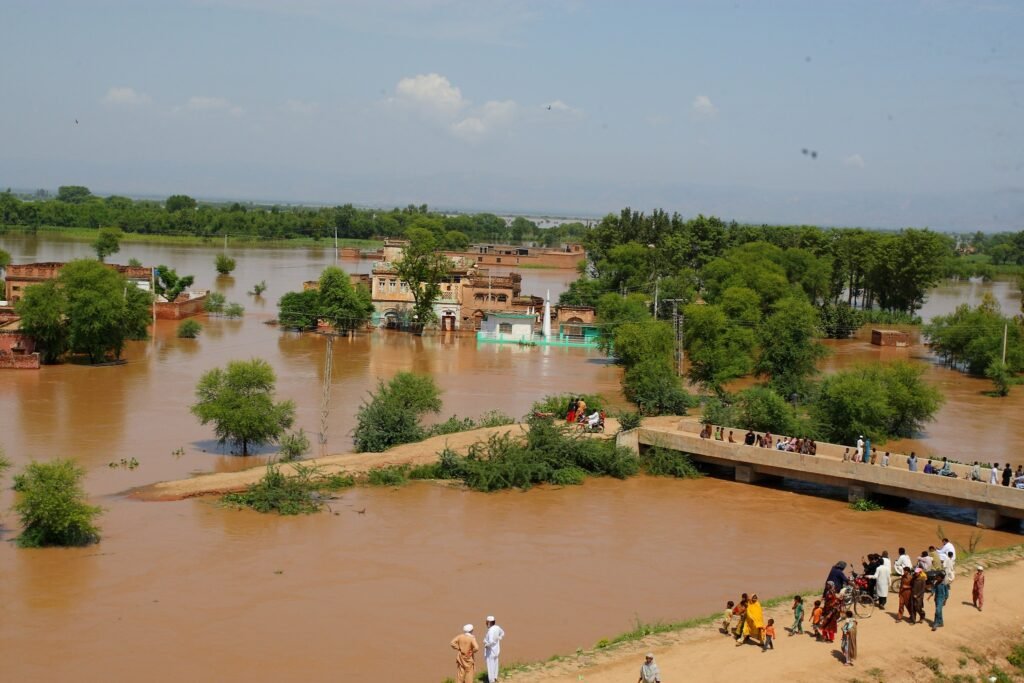
A Step-by-Step Plan for Communities and Government.
*This is an opinion/how-to article based on internet research, its not expert advice and I do not claim to be an expert on the topic.
Please read part 1 here.
Introduction: From Crisis to Preparedness
Pakistan’s devastating floods of 2022, 2023, and now 2025 have proven that extreme weather is no longer an anomaly — it’s the new normal. Monsoon rainfall is becoming more erratic, glaciers are melting faster, and rivers like the Indus are bursting beyond capacity. According to the NDMA and UN OCHA, more than 10 million people have been displaced by floods in the last three years alone.
In Part 1, we explored why floods happen so frequently in Pakistan — poor drainage systems, outdated dams, encroachment on floodplains, deforestation, and climate change. Now, in Part 2, we move from assessment to action: practical steps that households, communities, and governments must take to reduce future losses.
Floods are inevitable. Catastrophe is not.
1. Household Preparedness: Protecting Families First
The foundation of resilience starts at home. Families that prepare in advance face fewer losses, faster recovery, and lower health risks.
Key Steps Every Household Should Take
- Emergency Bag (72-hour kit): Packed with food, clean water, medicines, copies of CNICs, cash, torchlights, and radios.
- Waterproof Storage: Use sealed containers for documents, jewellery, and electronics.
- Safe Zones: Identify the nearest school, mosque, or community centre that can serve as a shelter.
- Practice Evacuation: Children and elderly should know escape routes.
- Livestock Safety: Farmers must build raised sheds or arrange transport for animals, which are often left behind.
💡 According to IFRC guidance, households with pre-packed emergency kits survive floods with 40% fewer losses than unprepared households.
2. Community-Level Readiness
Flood resilience is strongest when neighbours work together.
Community Actions
- Mapping Vulnerable Groups: Mark households with elderly, disabled, or pregnant members.
- Volunteer Teams: Train youth for rescue, first aid, and evacuation support.
- Resource Pooling: Boats, tractors, fuel, and water pumps should be shared.
- Community Shelters: Local leaders must designate mosques, schools, and government halls as safe zones.
📋 Downloadable templates for community volunteer rosters and emergency stock records will be included at the end of this blog.
3. Government Responsibilities: Quick Wins and Structural Change
Floods cannot be prevented, but government action can decide whether they become a manageable challenge or a national disaster.
A. Strengthen Early Warning Systems
- Expand SMS alerts in Urdu, Sindhi, Punjabi, Pashto, and Balochi.
- Install river monitoring stations along the Indus and its tributaries.
- Build cross-border data-sharing agreements with India, Afghanistan, and China for dam discharge alerts.
B. Improve Evacuation Infrastructure
- Pre-position boats, trucks, and helicopters in flood-prone districts like Sukkur, Muzaffargarh, and Charsadda.
- Stockpile emergency supplies: chlorine tablets, mosquito nets, tents, and solar lamps.
- Train local rescue brigades with NDMA and PDMA support.
C. Health and Sanitation
- Deploy mobile medical units during floods.
- Provide cholera kits and vaccination drives in affected areas.
- Maintain clean drinking water supply through portable purification plants.
D. Urban Planning and Land Use
- Stop illegal construction on nullahs and riverbeds.
- Expand and maintain stormwater drainage systems in Karachi and Lahore.
- Incentivize green infrastructure — wetlands, mangroves, and urban parks.
4. Long-Term National Resilience Plan
Flood control is not just about emergency response — it’s about redesigning how Pakistan lives with water.
A. Structural Investments
- Dams and Reservoirs: Build modern, transparent water storage facilities.
- Embankments and Levees: Reinforce riverbanks with climate-resilient designs.
- Raised Housing Models: Encourage stilt housing in rural floodplains.
B. Policy and Governance
- Mandate district-level contingency plans.
- Launch a National Flood Insurance Scheme for farmers and small businesses.
- Create a Climate Resilience Fund financed by carbon credits and international donors.
C. Agricultural Transformation
- Train farmers in flood-tolerant seed varieties.
- Develop livestock evacuation corridors.
- Establish community grain banks on elevated platforms.
5. Step-by-Step Roadmap
| Phase | Timeline | Community Actions | Government Actions |
| Immediate | 0–6 months | Household kits, drills, community rosters | SMS alerts, embankment repairs, stockpiles |
| Short-Term | 6–18 months | Local shelter identification, livestock planning | Expand drainage, build storage facilities, deploy mobile health units |
| Medium-Term | 2–3 years | Flood-tolerant agriculture, volunteer training | District contingency plans, zoning reforms |
| Long-Term | 5+ years | Cultural shift to resilience living | Reservoir management, housing reforms, insurance schemes |
7. Conclusion: A Shared Responsibility
Floods in Pakistan are not just a natural hazard; they are the outcome of weak planning, poor governance, and lack of community readiness. If households prepare, if communities organize, and if the government invests in both quick wins and structural reforms, the losses of 2025 need not be repeated in 2026.
The waters will rise again — the question is, will we rise with them?