


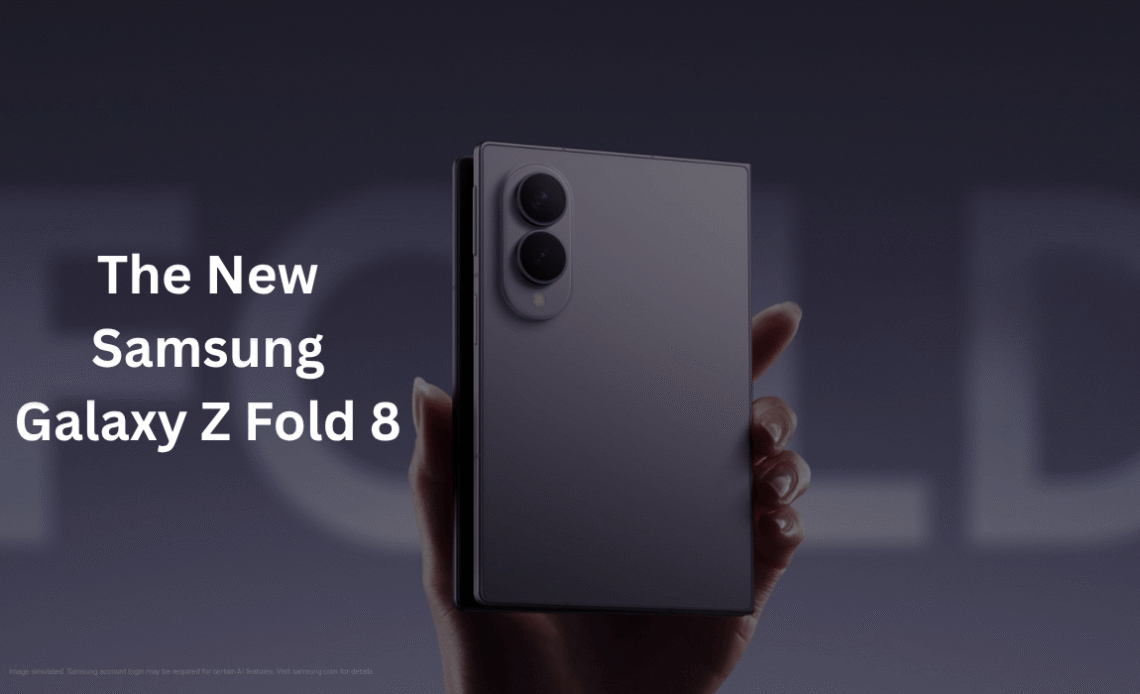
Since creating the foldable category back in 2019, Samsung has stuck stubbornly to a very specific form factor: a tall, narrow outer screen that unfolds into a large, slightly awkward “book-style” inner display. However, at their Galaxy Unpacked event on July 22, 2026, Samsung completely rewrote their own design rules. They officially split their flagship foldable into two distinct devices: the Galaxy Z Fold 8 and the Galaxy Z Fold8 Ultra.
While the Ultra model caters to power users by keeping the classic, tall design and stacking it with premium hardware, the standard Galaxy Z Fold8 is the true “odd one out” this year. Here is why Samsung’s most innovative foldable in years is actually the cheaper model.
Galaxy Z Fold 8 – New Form Factor
1. The “Passport” Design
The biggest shock of the Z Fold8 is its shape. Samsung has entirely ditched the tall book-style form factor for the standard model, opting instead for a device that is much shorter and significantly wider.
- The Cover Screen: When closed, the Fold8 features a 5.5-inch AMOLED cover screen with a 10:16 aspect ratio. This makes it feel much closer to a traditional, albeit slightly compact, smartphone compared to the narrow remote-control shape of previous generations.
- The Inner Display: When unfolded, the 7.6-inch Dynamic AMOLED screen reveals a squarer 4:3 aspect ratio.
This shift is a massive win for media consumption. The 4:3 inner screen means that most widescreen videos and apps run naturally without the massive black letterboxing bars that plagued older models. It is essentially designed to be used in landscape mode straight out of your pocket.
2. Incredibly Lightweight
Another area where the standard Fold8 stands out is its portability. Foldables have historically been heavy, brick-like devices. The new Z Fold8 is officially Samsung’s lightest Fold ever, weighing in at just 201 grams.
To put that into perspective, it is only slightly heavier than a standard iPhone Pro model. The device measures 9.7mm thick when folded closed, making it far more comfortable for one-handed use than the premium Ultra variant.
3. Where It Compromises
To keep the Fold8 positioned below the Ultra model, Samsung did have to make a few hardware concessions:
| Feature | Galaxy Z Fold8 | Galaxy Z Fold8 Ultra |
| Main Camera | 50MP | 200MP |
| Telephoto Lens | None (Relies on digital/main crop) | Dedicated 3x Optical |
| Battery | 4,800 mAh Silicon-Carbon | 5,000 mAh Silicon-Carbon |
| Inner Display Size | 7.6 inches | 8.0 inches |
Despite these cuts, performance is not one of them. Both the Fold8 and the Fold8 Ultra are powered by the exact same customized Qualcomm Snapdragon 8 Elite Gen 5 processor, ensuring they handle identical AI workloads and gaming demands.
Verdict
The standard Galaxy Z Fold8 is an incredibly bold move. By fundamentally changing the aspect ratio, Samsung has finally built a foldable that prioritizes ergonomics and everyday usability over sheer screen real estate. If you want a 200MP camera and a massive 8-inch canvas for intense productivity, the Ultra is waiting for you. But for the vast majority of users who just want a highly pocketable phone that turns into a great media tablet, the new passport-styled Z Fold8 is the superior—and much more interesting—choice.