


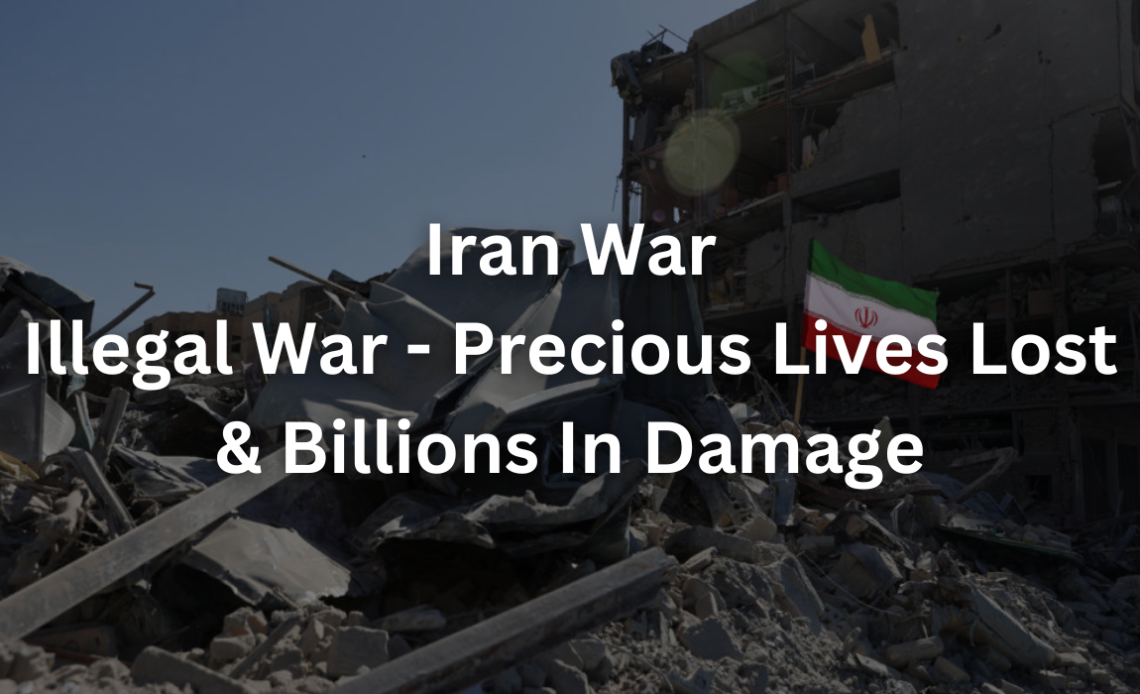
The Middle East is no stranger to conflict, but the recent military escalation – the Iran War – represents a catastrophic breach of international norms. We are now 1 week into the joint US-Israeli military campaign against Iran—codenamed Operation Epic Fury. With the stunning assassination of Supreme Leader Ayatollah Ali Khamenei over the weekend, the geopolitical landscape of the region has been permanently altered.
But as the bombs continue to fall on Tehran and Isfahan, two distinct stories are emerging: the staggering human and economic toll of an unsanctioned war, and the rapid, highly coordinated mobilization of the Iranian resistance hoping to seize this chaotic moment.
1. The Latest Figures: A $3.7 Billion Iran War
The scale of this bombardment is unprecedented in modern Middle Eastern history. By bypassing the UN Security Council, Washington and Tel Aviv have unleashed a massive, unchecked aerial campaign.
- The Toll: As of Friday morning, the death toll in Iran has officially surpassed 1,230, with thousands more injured and hospitals operating beyond capacity.
- The Firepower: The Israeli military claims to have achieved “near-complete air superiority,” conducting over 2,500 strikes targeting defense systems, refineries, and devastatingly, civilian infrastructure, including schools, in the Parand district.
- The Financial Cost: According to the Center for Strategic and International Studies (CSIS), the first 100 hours of Operation Epic Fury cost the US an eye-watering $3.7 Billion (roughly $891 million per day).
2. The Conflict Spills Over: The Sinking of the IRIS Dena
This is no longer a localized war; it is bleeding violently into international waters. In a shocking escalation this week, a US submarine torpedoed and sank the Iranian frigate IRIS Dena in the Indian Ocean, just 44 nautical miles off the coast of Sri Lanka.
- The Context: The unarmed ship was returning from a multinational naval exercise hosted by India. The sudden sinking resulted in the deaths of 87 Iranian sailors.
- The Fallout: This single strike has sent shockwaves through the global shipping industry and dragged South Asia into the crosshairs, forcing neighboring countries to frantically evacuate their own crews from regional waters.
3. The Resistance Makes Waves
With the regime’s leadership in absolute chaos and communication networks blacked out, organized Iranian opposition groups are viewing this as the final chapter of the Islamic Republic.
- The Provisional Government: The National Council of Resistance of Iran (NCRI) has officially announced the formation of a “Provisional Government,” presenting a formal roadmap for a secular, democratic republic once the current regime falls.
- Boots on the Ground: Despite heavy security crackdowns, PMOI (People’s Mojahedin Organization of Iran) Resistance Units are actively mobilizing inside the country. From Tehran to Shiraz, activists are defying curfews to spray-paint anti-regime slogans and hold up signs declaring that the “National Liberation Army will return.”
- The Diaspora: Exiled opposition networks, including the newly formed SOS Iran, are working around the clock to fund activists and set up local VPNs to bypass the nationwide internet blackout, keeping the flow of information alive so the world can see what is happening.
Verdict
You cannot bomb a region into stability. While the US and Israel may achieve their tactical military objectives of dismantling Iran’s nuclear and defense infrastructure, they are plunging the entire Middle East into an unpredictable abyss.
The Iranian resistance is highly organized and ready for a transition, but a regime change imposed by foreign missiles rarely ends in a bloodless democratic transition. The next few weeks will decide the fate of the region for a generation.